Daycare (Kita) in Hamburg – Everything you need to know
 Arianne Vogt
Kita in Hamburg: The complete overview

In short: Kita in Hamburg brings together a diverse provider landscape, strong early education, and real outdoor learning—even in the city.
🧭 Navigation & terminology
Contents:
- Why it matters
- Types of Kita compared
- Step-by-step: Securing a place
- Perspectives, myths & expert check
- Strategic pros & cons
- FAQ & decision support
Key terms:
- Early childhood education: All holistic learning and development in the early years—far beyond simple “care”.
- Parent–educator partnership: Professional, respectful, transparent cooperation between families and Kita staff for the child’s benefit.
1. Why choosing the right Kita in Hamburg matters more than ever
In a busy city, families juggle demanding jobs with the wish for a nurturing, developmental environment. Picking the right Kita in Hamburg is no longer “just logistics”—it is a fundamental education choice. Parents look for reliable hours and a safe base where children can bond with nature and with themselves despite urban stimulation.
Trends in Hamburg’s care landscape
Hamburg’s voucher system supports a wide mix of providers—and healthy competition on quality and clear educational profiles. Digital tools (management systems, parent apps) free educators from admin so they gain time with children and mindfulness in daily practice. Demand is growing for an urban nature concept: the city as part of outdoor pedagogy, not its opposite.
Kita in Hamburg: Looking for a Kita in Hamburg that combines city life and nature? Stadtküken runs 11 daycare centres in Hamburg. Each links an urban site with direct access to green space—forest edge, near a park, or large gardens. We want every child to have space to grow, practise mindfulness, and learn outdoors. All locations for your Kita in Hamburg
2. Types of Kita in Hamburg compared
Knowing typical models helps you choose strategically.
| Model / type | Focus / audience | Main advantage | Place-search complexity |
|---|---|---|---|
| Standard municipal / local Kita | Neighbourhood core provision | Reliable routines, short trips | Medium |
| Forest-only Kita | Families wanting intense outdoor life | Strong resilience focus (100% outside) | High (weather & logistics) |
| Modern profile Kita (e.g. Stadtküken) | Urban families wanting nature + structure | Strong management + urban nature concept | Medium to high (popular) |
3. Step by step: Securing a Kita place
A structured search secures both a place and a fit with your values.
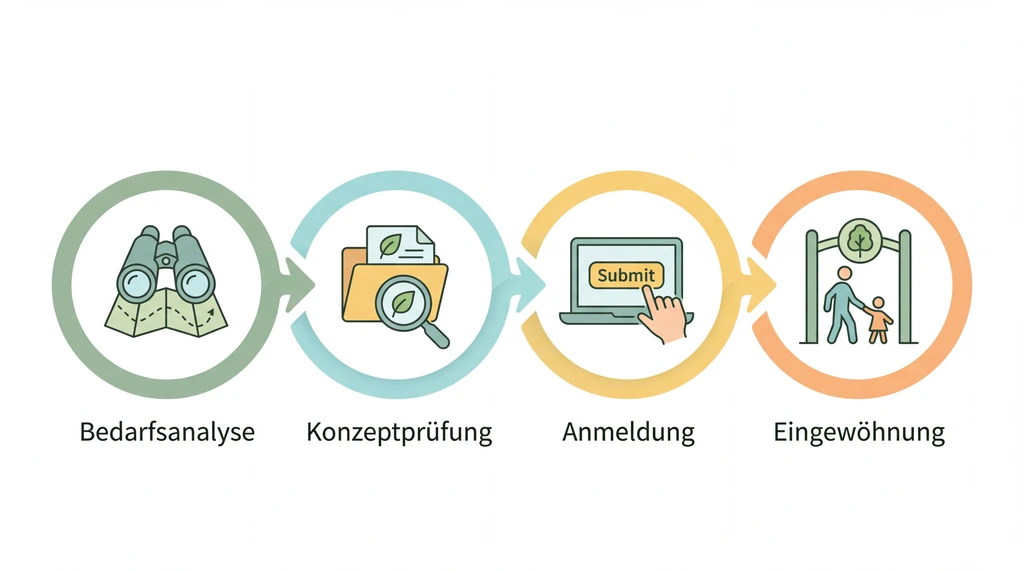 Caption: The path to your preferred Kita in Hamburg: plan early and compare concepts.
Kita voucher deadlines: Every Hamburg Kita needs a valid voucher. Apply at least 3–6 months before the planned start at your district office—or you may pay full fees.
- Preparation & needs: Clarify priorities—which pedagogical approach fits you? How long is the commute?
- Parent quick checklist:
- Valid Hamburg Kita voucher applied for
- Preferred focus (e.g. outdoor pedagogy) defined
- Working hours and hours of care needed clarified
- Parent quick checklist:
- Providers & concepts: Visit open days or digital tours. Ask about the staff-to-child ratio and the centre’s quality approach.
- Registration & contract: For profile Kitas, join waiting lists early (sometimes in pregnancy). Read contracts for optional extras (e.g. organic meals).
- Settling-in & participation: Good providers offer gentle settling-in. Use apps or channels to join the living partnership with staff.
4. Perspectives, myths & expert check
Parent forums repeat misleading ideas.
Approaches in practice
- Traditional: Focus on cover during parents’ work; pedagogy second.
- Quality-led: Kita as a first educational setting—high professionalism, digital transparency, real participation.
Myth vs. fact
❌ Myth: “Digital Kita” means toddlers parked in front of screens.
✔ Fact: Digitisation targets management: documentation, planning, parent communication—so staff gain more direct time with children.
❌ Myth: Outdoor pedagogy cannot be authentic in dense Hamburg.
✔ Fact: A thought-through urban nature programme uses parks, raised beds, and trips to nature reserves so children value and protect nature in the city.
5. Strategic pros & cons of strong profile Kitas
What a profiled centre can mean for your child.
✅ Advantages:
- High care quality: Clear quality systems and professional educator development.
- Transparency & trust: Apps can show meals, sleep, trips—in real time.
- Holistic growth: City life plus outdoor pedagogy supports resilience, motor skills, and environmental awareness.
❌ Challenges:
- Search effort: Popular profile Kitas may have long waiting lists—register very early.
- Possible extras: Optional services (e.g. 100% organic food) may add voluntary costs beyond the standard voucher.
💬 Expert voice: “An excellent Kita in Hamburg is more than a care site—it is a living environment. Modern structures and digitisation can professionalise educator work; at the same time, a deep, nature-close partnership with parents builds the strongest foundation for children’s futures.” – Arianne Vogt
FAQ: Kita in Hamburg
How do I find the right Kita in Hamburg for my child? Start early with Hamburg’s Kita information system; filter by focus (e.g. nature Kita). Visit open days to sense atmosphere, team quality, and mindfulness in daily life.
What does a place cost?
With Hamburg’s voucher, the first five hours (with lunch) are fee-free. Beyond that, fees are income-related.
👉 Tip: Use the Stadtküken Kita voucher calculator to estimate your share—based on Hamburg’s fee rules and planning for a Stadtküken site.
Why choose a Kita with an “urban nature” concept? For city children, contact with nature supports motor and cognitive development. An urban nature approach helps children learn ecological connections where they actually live—not only in distant countryside.
👤 About the author
Arianne Vogt is a member of the press team at Stadtküken (Die Natur-Kita) in Hamburg. She prepares editorial content on early childhood education, outdoor pedagogy, and everyday Kita life, with a focus on clear language, practical relevance, and professional consistency.
Editorial note: This article has been reviewed for accuracy and currency.
Sources & further reading
- Hamburg Childcare Act (KiBeG) and Hamburg education guidelines for daycare
- Professional articles on quality and digitalisation in Kita management (Stadtküken press team)